
Lowndes County residents have until Nov. 25 to weigh in on a draft ordinance that would tell data center builders where they can go in the unincorporated county, how much noise they can make and water they can use, and who pays when one shuts down. The Board of Commissioners posted the draft Nov. 2 and plans to vote on it Dec. 8.
Stand-alone data centers would be allowed only on industrial land, and none could be built until the commissioners approved it at a public hearing, after finding that every standard in the ordinance is met. No variances, the usual exceptions to zoning rules, would be allowed. The county says the draft takes in most of the technical standards that residents asked for.
The draft sorts data centers into five sizes, from “minor” buildings under 20,000 square feet to “hyperscale II” complexes of up to 2 million square feet, the most the draft would allow anywhere. The bigger the facility, the more land and distance it needs. A minor center needs 20 acres and must sit at least 500 feet from residential, rural, commercial and other sensitive zoning districts. A hyperscale II center needs 600 acres, at least 1,500 feet from those districts and a 500-foot-wide belt of trees around the site. Every data center would stay at least 1,500 feet from the Alapaha, Little and Withlacoochee river corridors and 250 feet from wetlands, and no building could rise above 40 feet, not counting rooftop equipment.
No noise could be heard, and no vibration felt, at the edge of any of those districts. Cooling systems would have to run in a closed loop with no evaporative cooling, use county water, and send their wastewater out of the unincorporated county for disposal. Neither the coolant nor the fire suppression system could use PFAS, the “forever chemicals.” Backup generators would have to meet the federal Tier 4 emissions standard and could be tested for only one hour a day, on weekdays between 9 a.m. and 4 p.m. An operator would pay the full cost of any new power lines, substations or generation needed to serve its site.
If construction or operation stopped for 180 days, the operator would have to tear the facility down under a decommissioning plan approved before the first permit, backed by a surety bond of at least 100% of the estimated cost and re-estimated every five years. Operators would file compliance reports every January. Each day of a violation would count as a separate offense in Magistrate Court, with a fine of up to $1,000, up to six months in jail, or both.
Lowndes is not the only Georgia local government writing its own data center rules. Savannah, which paused large data centers in August, is taking comments on its own draft through Nov. 20. Its rules would also keep data centers on industrial land, by special use permit, and at least 1,000 feet from homes and schools, with a City Council vote planned for Jan. 28, the day before the pause ends. Lowndes would decide each project at a public hearing before the full board, and its distances for the largest sites run farther.
The ordinance would apply to new data centers and to expansions of existing ones after adoption. Comments go to the county in writing by Nov. 25, at the email address on the draft’s cover sheet, and the commissioners are scheduled to vote Dec. 8.
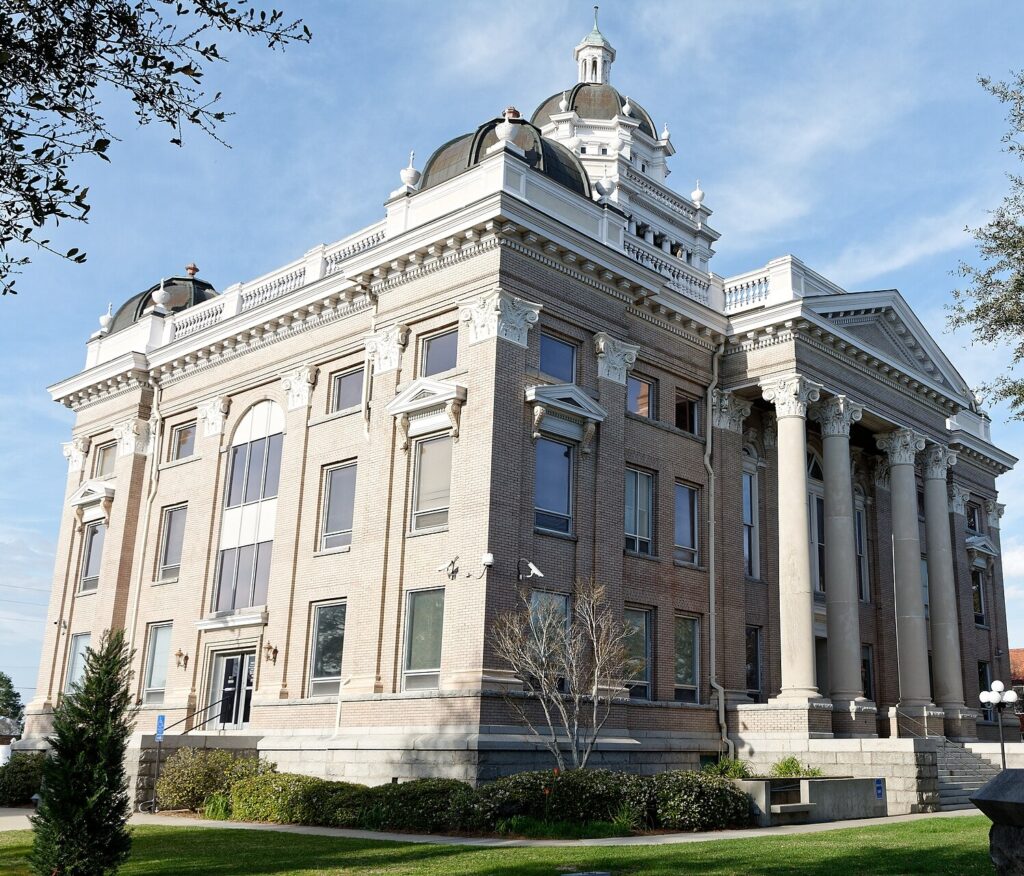
Photo: Bubba73 / Wikimedia Commons, CC BY-SA 3.0
See something we should check? Report a correction.
Corrections · Corrections policy