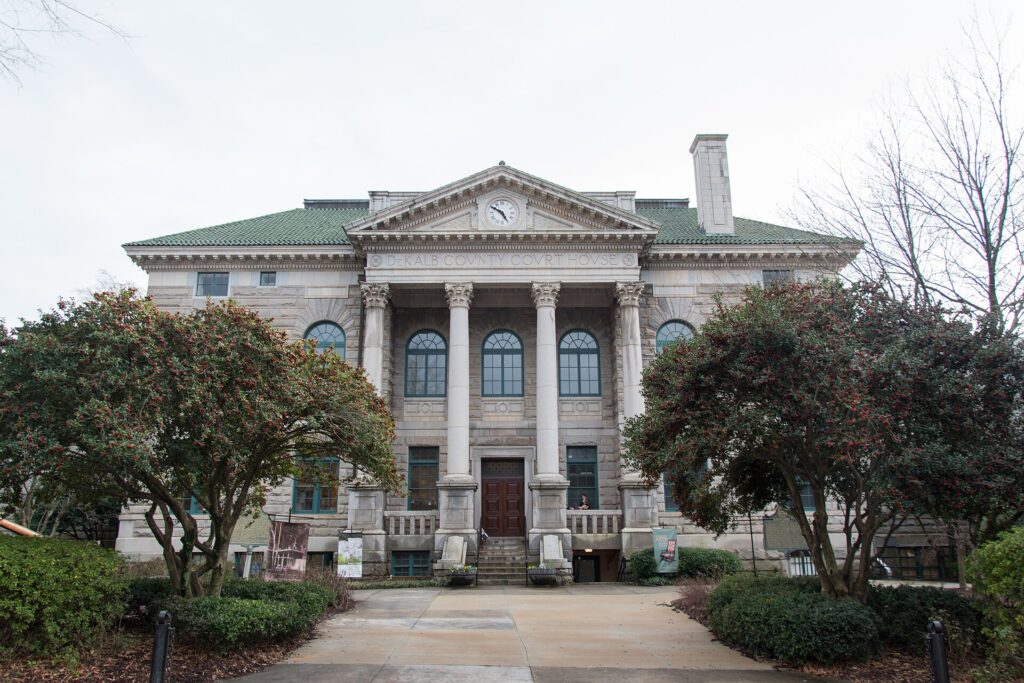

DeKalb County commissioners vote Thursday on a five-year housing plan that sets a goal of 15,000 affordable homes by 2032, in a county where, the plan finds, rents rose 86% in a decade and more than half of renters pay over 30% of their income for housing. The same night, a proposed crackdown on repeat nuisance properties heads for withdrawal.
The plan, written for the county by Enterprise Community Partners under a $249,994 contract, says housing has fallen behind people. The county added fewer homes than households in most years since 2011, and the Atlanta Regional Commission estimates it needs 70,000 more by 2035. A household earning the county’s median income cannot afford the median home, which sold for about $373,300 in 2025, and institutional investors own one of every three single-family rental houses.
The squeeze is sharpest at the bottom. About 4,600 residents, 1,600 of them children, live in extended-stay hotels and spend 77% of their income to stay there. The plan counts a shortage of about 23,000 rental units for the county’s lowest-income renters, and it says Black households, half the county’s population, made up 91% of its homeless population.
Thursday’s vote comes at the board’s 5:30 p.m. zoning meeting at 178 Sam’s Street in Decatur. A yes would write the plan into the goals chapter of the county’s 2050 Unified Plan, its long-range land use plan, and hand it to the Office of Housing to carry out, once CEO Lorraine Cochran-Johnson signs the resolution. The plan sets five goals and 38 strategies. They include converting hotels and underused buildings into housing for people without homes, rental assistance and landlord incentives, down payment help and heirs’ property services, and land use changes to allow “middle housing” types. The county has named a housing officer and is forming a housing advisory committee. The Planning Commission recommended approval 6-0 on Nov. 5. Every community council member who voted in October was for it, though two councils lacked a quorum, and one council asked the county to drop the words “by right” from a line that would let homeowners add backyard cottages and garage apartments in every residential zone without a case-by-case approval.
The same agenda could shelve, for now, a crackdown on repeat nuisance properties. The ordinance, filed in March, would let the county label a property a chronic nuisance after three documented incidents in 180 days or five in a year. Repeated noise violations, disorderly conduct, unlawful gatherings, assaults that bring police and illegal businesses in residential areas would all count, and the owner, operator or tenant would pay escalating fees capped at $5,000. The Planning Commission approved it 5-2 with one abstention in May, and the commissioners deferred it in May and again in August. On Nov. 5 the Planning Commission voted 6-0 to recommend withdrawing it without prejudice, on staff’s advice. Staff wrote that county departments still have to settle which one leads enforcement and answer legal questions about penalties, fee recovery, liens and restrictions on licenses and permits, and that withdrawing it would let a revised proposal come back. Commissioners decide Thursday whether to let it go.
A rewrite of the county’s sign code is on the agenda only to be put off. Staff and the Planning Commission want a full-cycle deferral to the January 2027 zoning agenda while feedback from workshops, community councils, and legal and technical advisory committees is folded in.
Ten other properties round out the night. Industrial land at 1680 to 1700 Henrico Road, inside the Soapstone Historic District along the Bouldercrest corridor, would become single-family homes, and a commercial lot at 5561 to 5567 Memorial Drive would become medium-density housing. The other eight include two rezonings for small-lot homes, two daycares, an office building, a freight company’s maintenance shop and trailer parking, the expansion of a place of worship, and fuel pumps with an accessory alcohol outlet at 2510 Bouldercrest Road.
The plan’s first goal is to make homelessness “rare, temporary, and non-recurring,” including turning extended-stay hotels, where thousands of residents now pay most of their income for a room, into housing.
Photo: Ɱ / Wikimedia Commons, CC BY-SA 4.0
See something we should check? Report a correction.
Corrections · Corrections policy